Tibetan Astrology, Made Accessible
Discover your birth element, animal sign, and cosmic energy through authentic calculations rooted in the Nyingma tradition.
What is Tibetan Astrology?
Tibetan astrology, known as Tsikartsi—“the science of elemental calculation”—is an ancient system developed through the meeting of Indian Buddhist wisdom and Chinese cosmology. For centuries, Tibetan scholars and lamas used it to understand timing, karma, personality, and the unseen patterns influencing human life.
Most people know astrology through zodiac signs, but Tibetan astrology goes further. It works with elemental cycles, animal energies, numerical forces (Meva), and directional patterns (Parkha), creating a layered picture of a person’s tendencies, opportunities, and challenges. Rather than predicting a fixed destiny, it reveals conditions: when to act, when to wait, what energies support you, and where obstacles may arise.
Beyond the year, Tibetan astrology also considers Meva (nine magic squares) and Parkha (eight trigrams), which provide deeper insights into karma and directional energies. The lunar calendar is essential for determining auspicious days for meditation, business, and daily activities.
It has traditionally been used for choosing auspicious dates, understanding compatibility, guiding important life decisions, and supporting spiritual practice. Much of this knowledge has remained difficult to access outside traditional settings. Our aim is to make these authentic calculations available in a clear and practical way while preserving the depth behind them.
Pema Choling Gumba
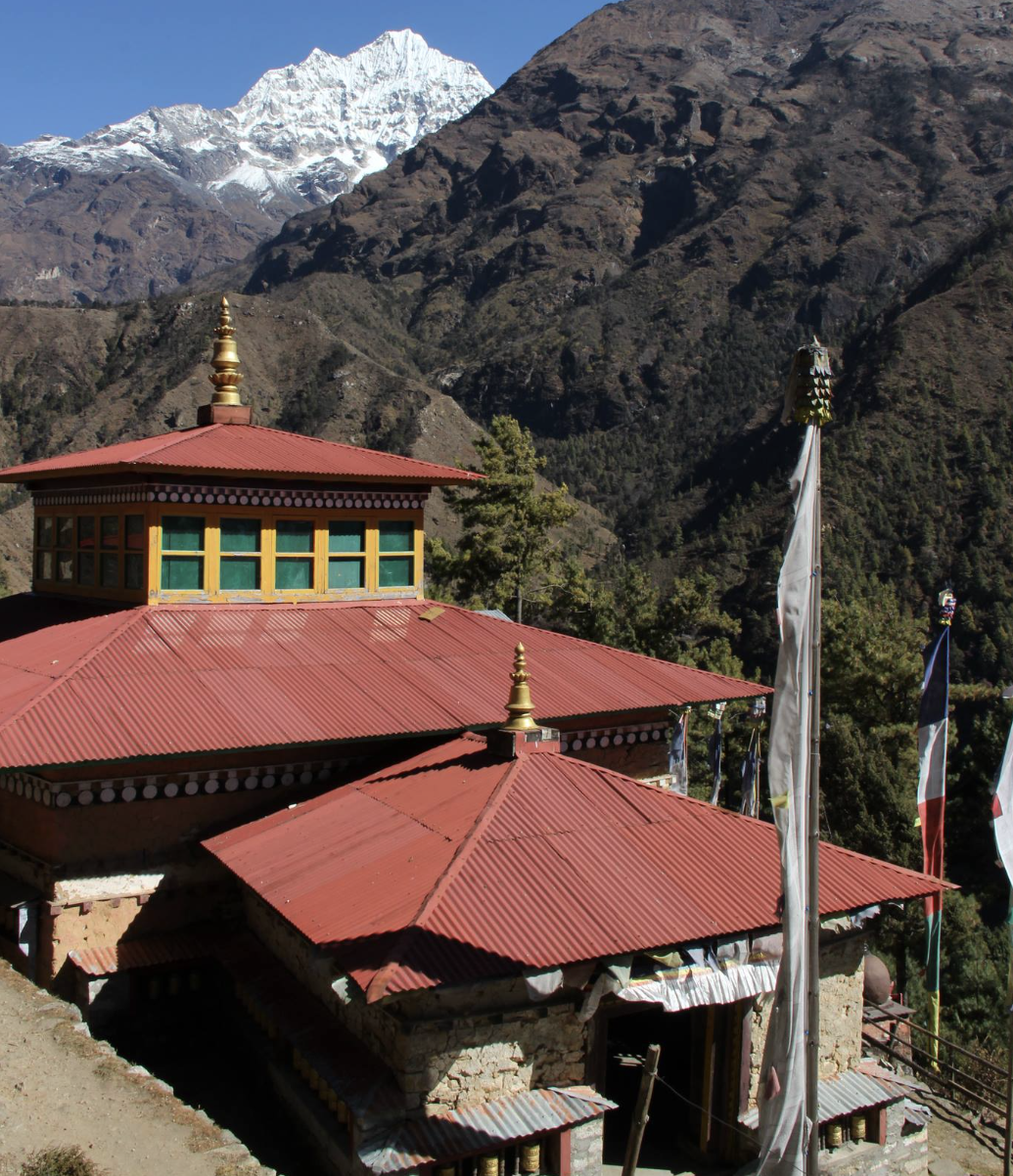
Pema Choling Gumba, also known locally as Rimishung Monastery, is a centuries-old Buddhist monastery located above the village of Phakding in the Solukhumbu District of Nepal. Founded more than 500 years ago by a lama who came from Tibet, the monastery belongs to the ancient Nyingma tradition and has served as an important spiritual center for Sherpa communities ever since.
The devastating 2015 Nepal earthquake destroyed much of the original historic structure. Despite widespread damage across the region, rebuilding the monastery became a top priority for the local community. Today, Pema Choling Gumba has been carefully reconstructed using traditional architectural designs and sacred artwork, once again standing as a place of prayer, learning, and cultural continuity.
For generations, the monastery has been far more than a religious site. It is where families come for blessings, prayers, and ceremonies marking important life events. Monks perform daily ceremonial practices and annual festivals, while the space also serves as a gathering place for cultural activities, traditional songs and dances, and community meetings.
Situated at around 2,672 meters (8,766 feet) in elevation and surrounded by forests, stone prayer walls, and stunning Himalayan scenery—including views of Mount Thamserku—the monastery offers a peaceful atmosphere slightly away from the busy Everest trekking route. Visitors who make the short climb from Phakding often describe the experience as quiet, grounding, and spiritually uplifting.
From the Journal
Our Rituals
Domang
$125 USD
Ritual for removing obstacles and creating favorable conditions for the individual or family.
Learn MoreDolchok
$165 USD
Ceremony for peace and harmony in the home and environment.
Learn MoreSito (1 day)
$650 USD
One-day intensive ceremonial practice for deep purification and merit accumulation.
Learn MoreGayapsi
$175 USD
Purification and blessing ceremony for individual and environment.
Learn MoreSilge Dudok
$165 USD
Ceremony for clearing deep obstacles and removing negative influences.
Learn MoreMenchok
$125 USD
Medicine blessing ceremony for healing and protection.
Learn More